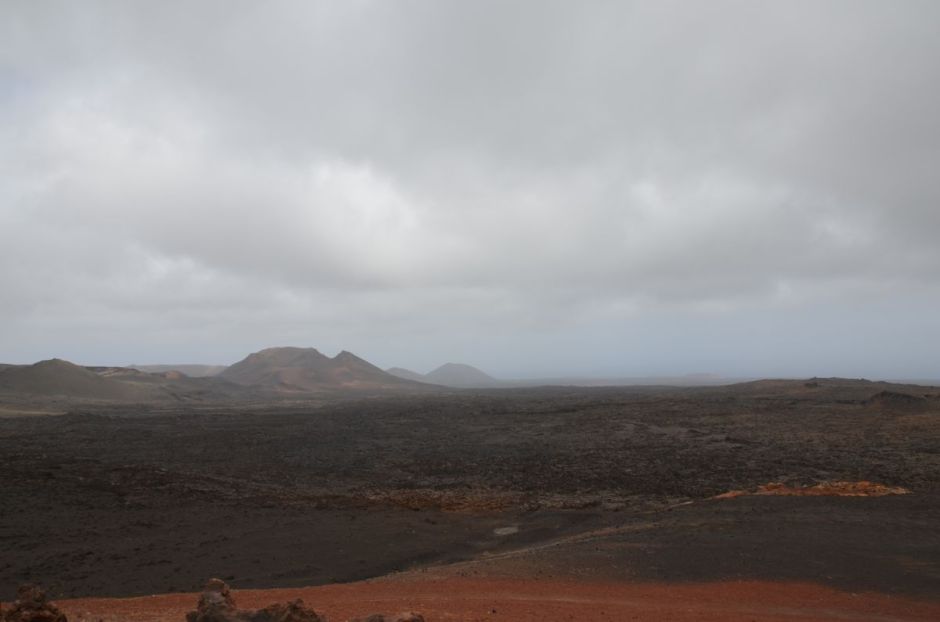
Stepping into Timanfaya National Park feels like leaving Earth behind. The ground beneath you literally glows with geothermal heat, radiating fire just inches under the surface. Surrounding you is a surreal, Martian landscape of twisted black lava and jagged volcanic peaks, stretching as far as the eye can see. To truly experience this untamed wilderness, we traded four wheels for four legs. Swaying to the rhythm of a camel ride through the ash fields, we felt the true power of Lanzarote’s volcanic heart. Welcome to Timanfaya, where the island’s fiery history is still very much alive.
In this guide:
Introduction:
At the beginning of June, we set off on a wonderful 10-day holiday to Lanzarote. Having visited Tenerife a couple of years ago, we were incredibly excited to discover more of the beautiful Canary Island Archipelago. We decided to rent a car, which gave us the ultimate freedom to explore every corner of this unique island and truly appreciate its dramatic, otherworldly nature. I am thrilled to kick off my Lanzarote blog series with our unforgettable day at Timanfaya National Park.
Read more about visit of the volcano El Teide in Tenerife
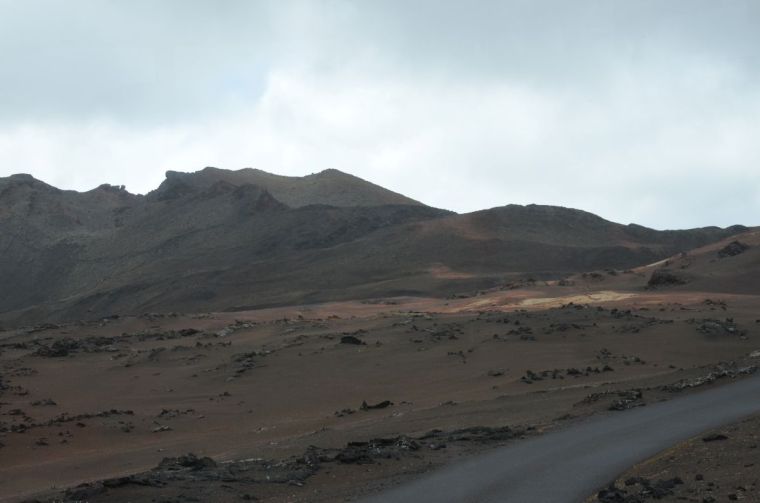
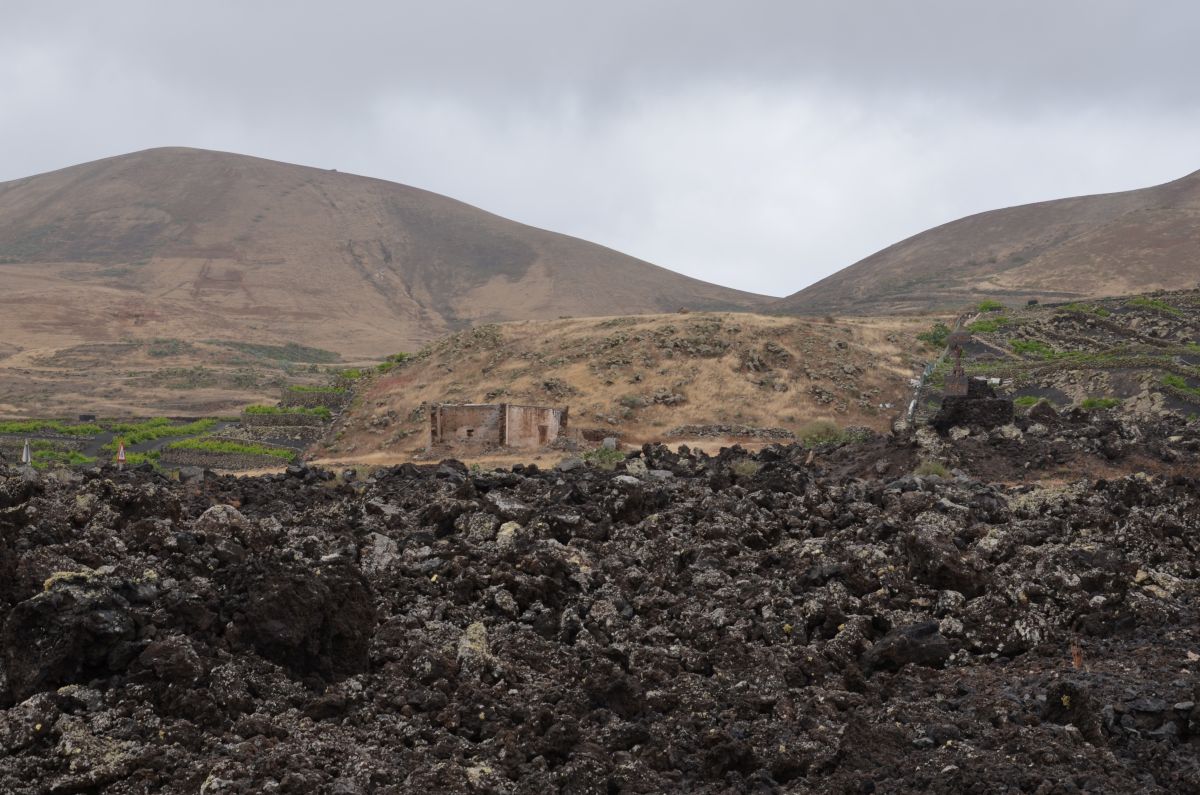
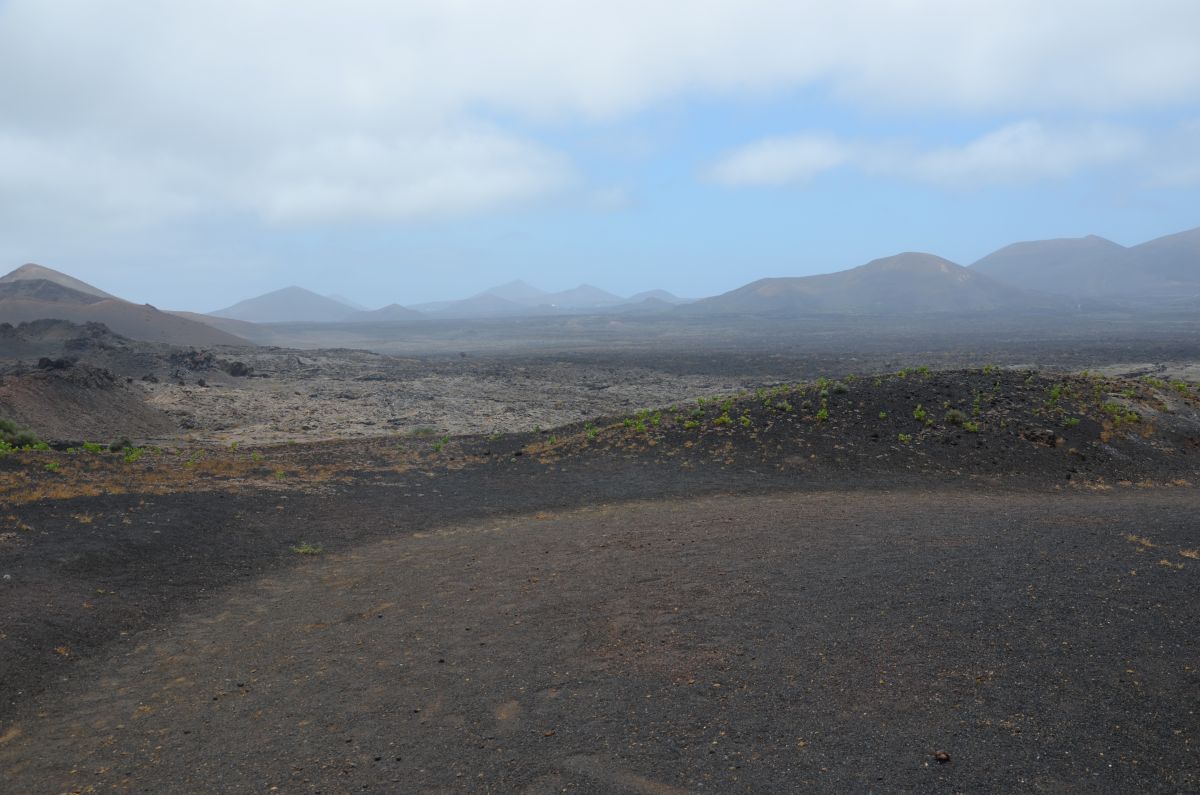
Situated in the southwest of the island, Timanfaya is traversed by the stunning LZ-67 road, which gives visitors their first breathtaking look at the sprawling lava fields. This surreal, Martian landscape was born out of complete devastation. Between 1730 and 1736, the earth violently broke open here, erupting continuously for over 2,000 days. A quarter of the island was buried under a thick blanket of lava, destroying eleven villages. Today, the volcanic history feels frozen in time.
Exploring Timanfaya National Park:
Bus ride around the Montañas del Fuego:
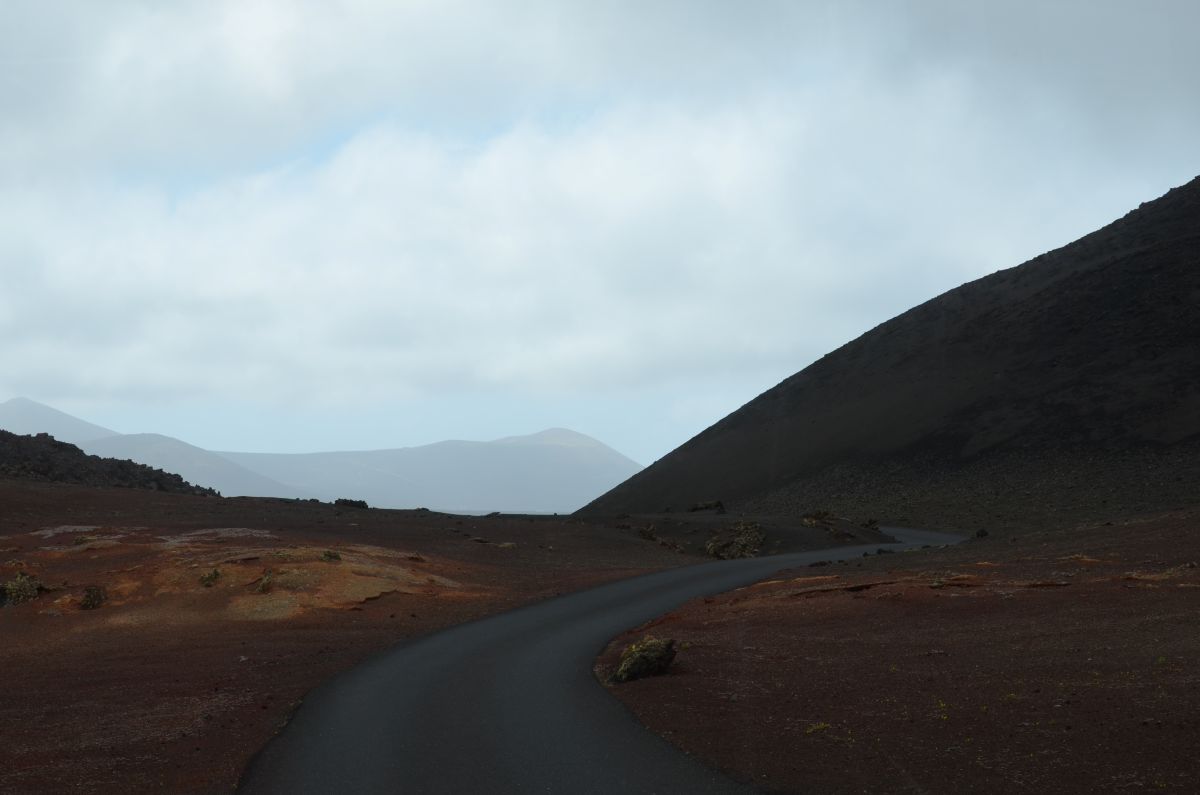
We started our morning at the Montañas del Fuego (Mountains of Fire). To protect the fragile volcanic environment, walking freely in the park is strictly forbidden and it is only possible to explore by doing ranger guided walks. However, if you don’t enjoy walking or are travelling with children, the absolute best option is the official 14 km bus tour.
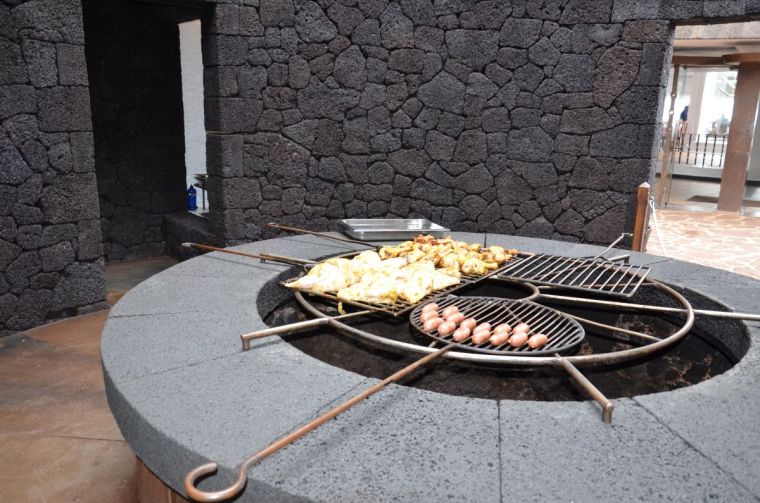
This experience is fully accessible from the Islote de Hilario hub located just off the LZ-67.From the gated park entrance, we drove across a sea of jagged lava fields to reach the main car park and the El Diablo Restaurant (where they actually cook food using geothermal heat from the volcano!). The entire setup was incredibly well-organised. The bus tour provides audio commentary in English, Spanish, and German, and there is even an app that visitors can download for additional languages.
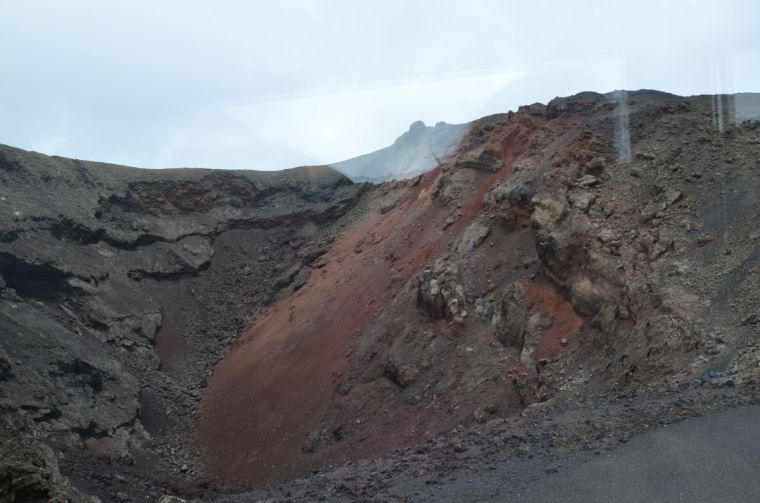
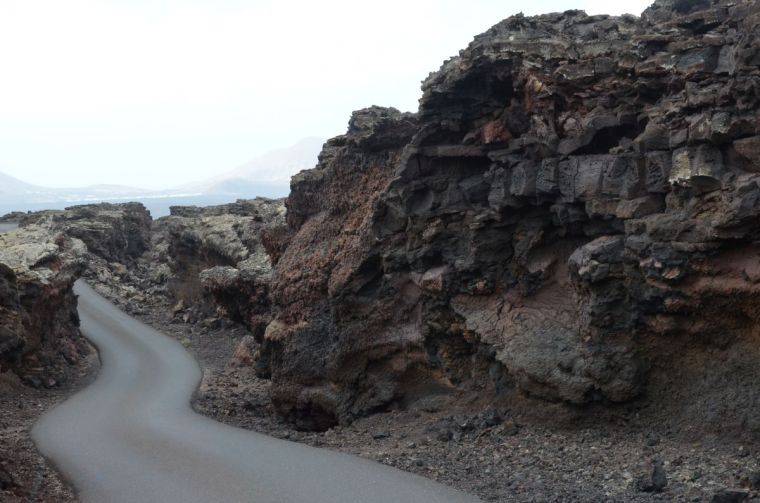
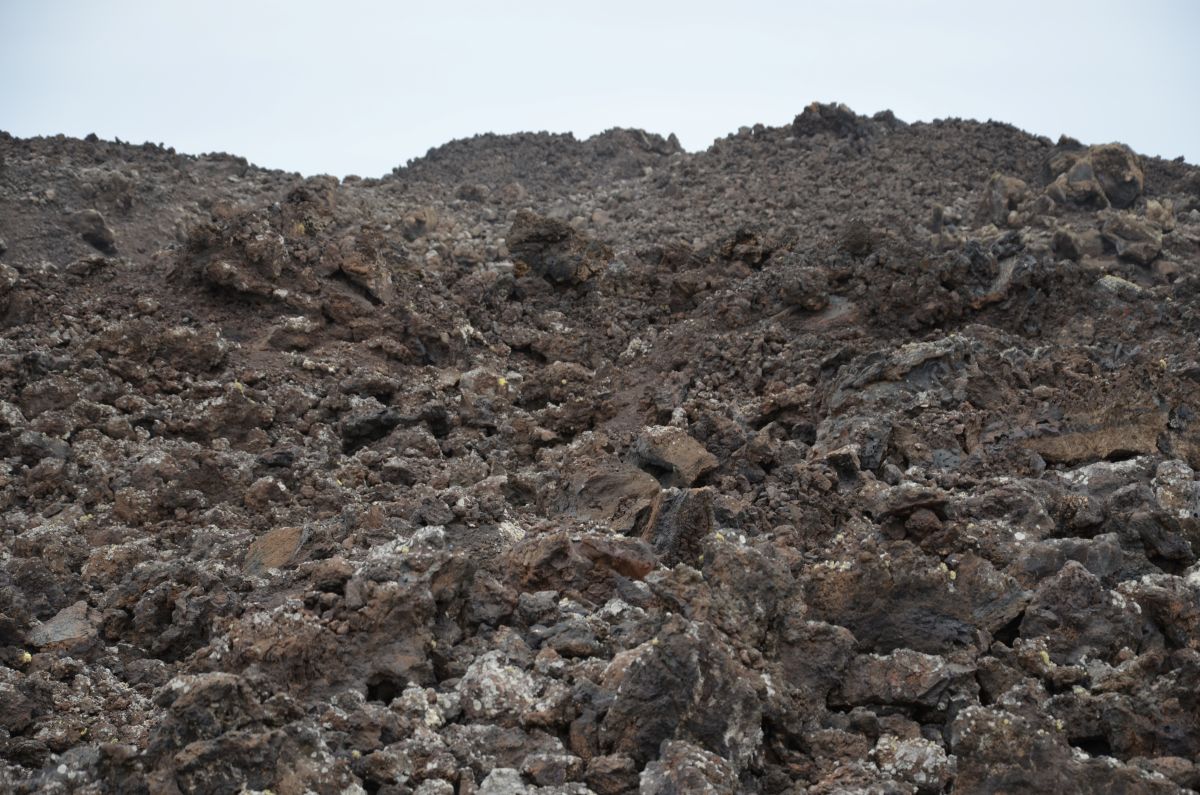
We managed to score the very front seats of the bus, right behind the driver, giving us an unhindered view of the narrow road twisting through the craters. I have to admit, it was a little thrilling and a bit scary! The road feels tiny compared to the size of the bus, and a few times we jokingly thought the front wheels were going to tip right into a volcanic crater. The scenery was utterly surreal. As a scientist, I was completely fascinated by the distinct geological rock layers and lava strata. Most importantly, Marcus absolutely loved it and created his own stories of dinosaurs coming out of craters!
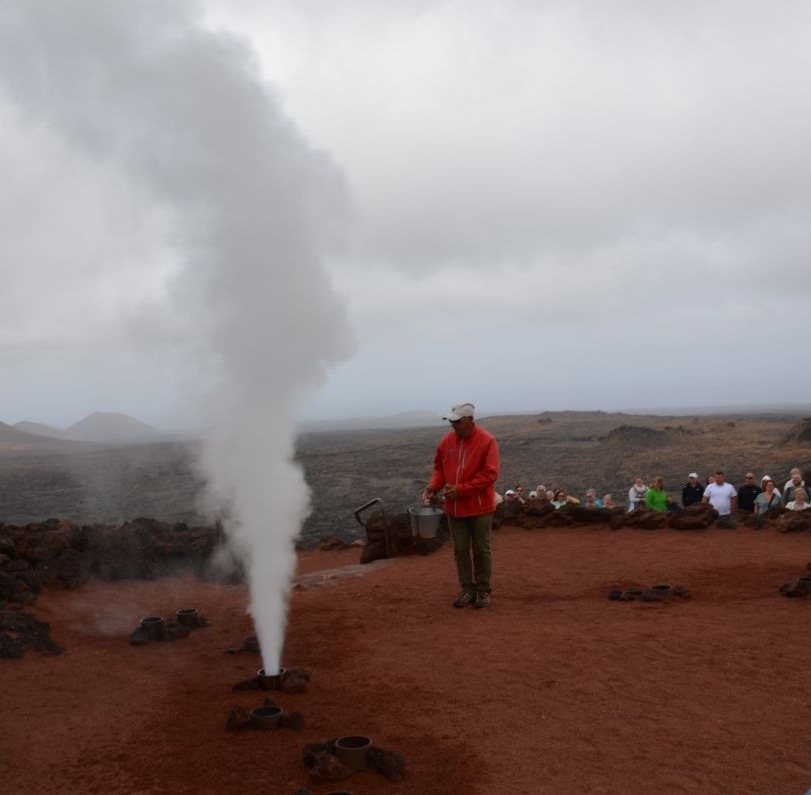
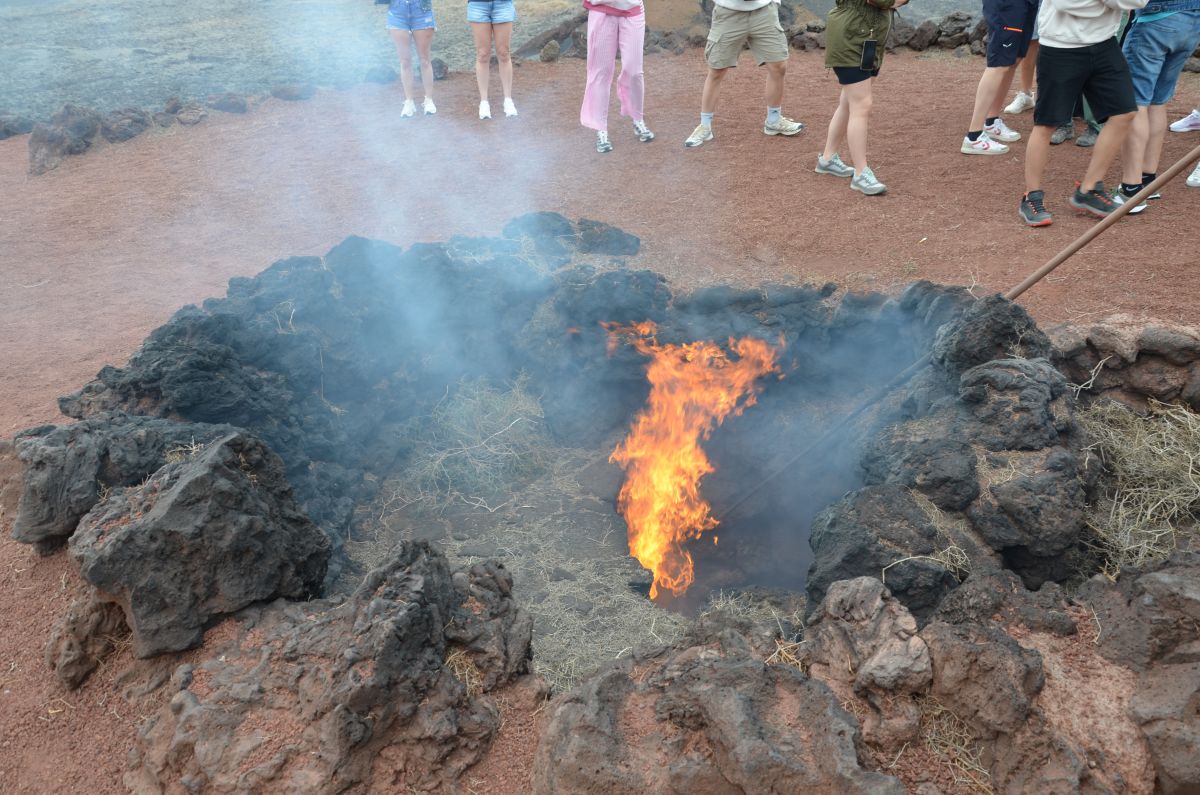
After the tour, the guides gave us a live demonstration of the volcano’s lingering power. They poured water into holes in the ground, which instantly blasted back up as roaring steam geysers, and showed us the natural geothermal heat radiating from the ground. We took a few moments to admire the panoramic views from the restaurant terrace before driving back out to the main road.
The Timanfaya Visitor Centre:
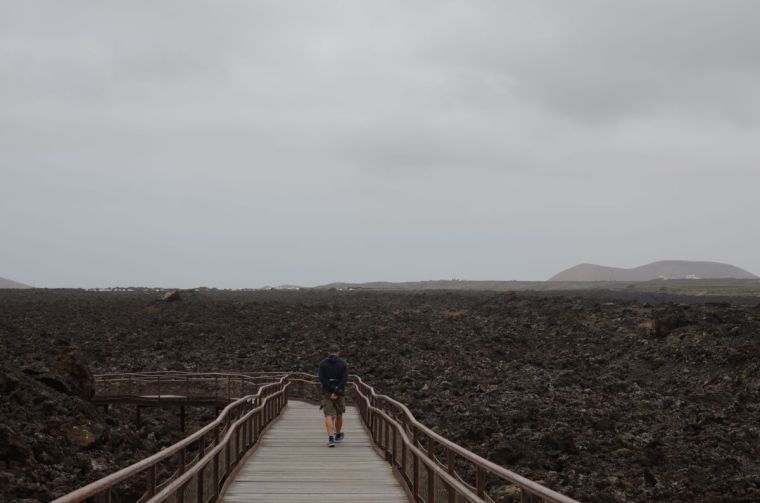
Next, we headed a few kilometres north along the LZ-67 to the Centro de los Visitantes (Mancha Blanca Visitor Centre). For curious minds, this free centre is an absolute must-visit. It explains the history of the island in great detail, shows how the Canary Islands were formed, and breaks down the science of how volcanoes work. There is also an elevated viewing platform extending over the lava fields, which let us take in the silent grandeur and sheer power of nature.
A Traditional Camel Ride:
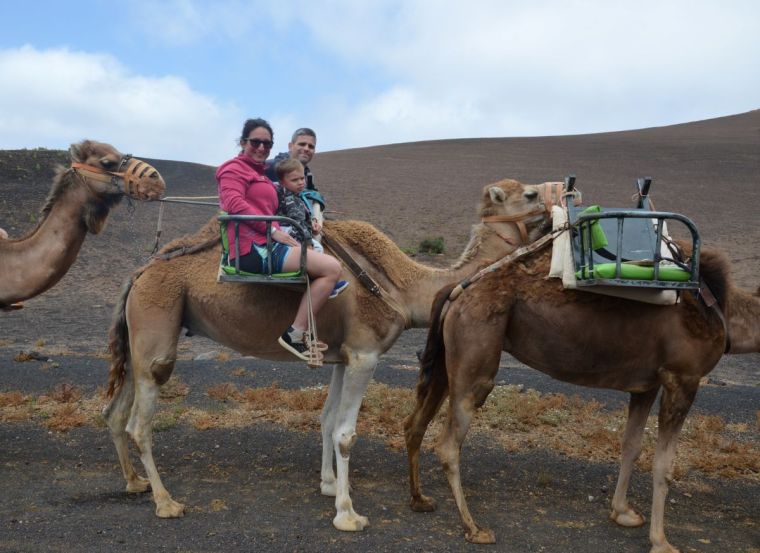
We finished our day with a classic Lanzarote experience: a camel ride. Driving south back toward Playa Blanca, we pulled into the Echadero de los Camellos (the camel station) right off the LZ-67. Camels (specifically single-humped dromedaries) have a rich history here. They were originally introduced to Lanzarote centuries ago to help farmers work the harsh, arid fields. As traditional farming declined, they became a vital means of transport and a beloved symbol of local culture. You will even spot giant camel sculptures on a roundabout near Yaiza built as a homage to them!
As we arrived, a large caravan of camels was just departing, while several other camel groups waited patiently. Because it wasn’t overly crowded, we waited a few minutes for a new group to form. In the end, our caravan was wonderfully small, consisting of just three families and a few empty camels.
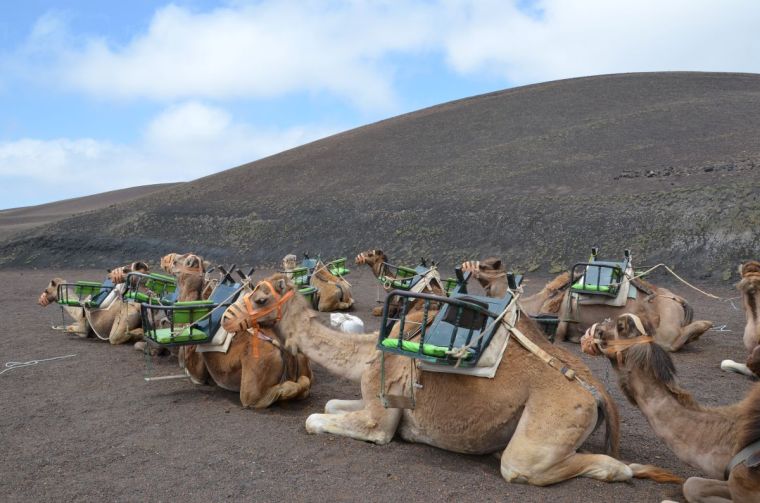
The wooden seats are rigged to hang on either side of the camel’s hump. To balance out the weight, Matt sat on one side, while Marcus and I shared the other (camels can easily carry up to 500kg!). The handler walked our caravan on a gentle 25-minute loop through the red volcanic sands, providing the perfect closing chapter to our national park visit. Marcus was completely enamoured by his camel and was so happy to give it a big cuddle at the end of the ride.
Before leaving, we popped into the small museum by the car park, which offers a lovely look into the historical importance of these animals on the island. By mid-afternoon, our first big day of exploring was complete. We drove back down to our hotel in Playa Blanca, just in time for Marcus to have a well-deserved nap and play in the pool.
Travel tips:
To help you plan your own day out, here are all the essential practical details you need to know before you go:
🌋 Montañas del Fuego & Bus Tour
- Booking: You must book your entrance tickets online in advance.
- Official website
- Cost: Approximately €30 for adults; free for children under 6 (as of June 2026).
- Duration: The volcanic bus tour takes about 45 minutes.
- Top Tip: Try to sit in the very front seats right behind the driver for the most dramatic, extensive views of the craters!
ℹ️ Centro de los Visitantes (Visitor Centre)
- Booking: No advanced booking required.
- Cost: Completely free to visit.
- What’s there: Great geological exhibitions for curious minds, a museum, and an outdoor viewing platform over the lava fields.
🐪 Camel Riding (Echadero de los Camellos)
- Booking: No advanced booking required; just turn up.
- Cost: Roughly €11 per person; free for children under 4 who sit on a lap.
- Payment: Cash only—make sure to bring physical euros with you!
- Duration: The scenic caravan ride through the volcanic sand lasts about 25–30 minutes.
Final Thoughts:
Join the Conversation
Have you been to Lanzarote or visited the Timanfaya National Park?
Share your thoughts: Don’t hesitate to tell us what you think by leaving us a comment below!
Stay Updated
If you enjoyed this adventure, consider subscribing below to our newsletter for more family and dog-friendly adventures in Europe and the United Kingdom.


We did the same, minus the camel ride. I was entranced with the scenery too xx
LikeLiked by 1 person
It is stunning isn’t it? The camel ride is nice for kids.
LikeLiked by 1 person
En voilà une visite peu commune ! J’aurais été quelque peu impressionnée. Quant à Marcus, il semble avoir une belle imagination et avoir bien profité de ces moments.
LikeLiked by 1 person
C’est assez impressionant en effet. Il est à l’âge ou tout est un jeu et tout se transforme en histoire facilement 😊.
LikeLike
You can easily compare Timanfaya National Park to a Martian landscape. The untouched volcanic terrain is quite striking and certainly a must-see in Lanzarote. I’d say it’s a place you’ll remember for being very unique. Thanks for sharing, and have a good day 🙂 Aiva xx
LikeLiked by 1 person
Absolutely agree Aiva. It is a place to see once in a lifetime.
LikeLiked by 1 person
😊😊😊
LikeLiked by 1 person
Such an interesting landscape volcanoes made. 😊
LikeLiked by 1 person
It is indeed. The photos don’t full show the beauty of the place.
LikeLike
Surreal landscape, I think I’d give the camel ride a miss though! 😀
LikeLiked by 1 person
The camel ride was a nice experience especially for a toddler.
LikeLiked by 1 person
An interesting post, Mélodie. Volcanic landscapes are so amazing (and to be respected). Cheers.
LikeLiked by 1 person
Thank Lynette. Absolutely, we need to respect Nature.
LikeLiked by 1 person
I’m glad the camel ride was such a success though I might give it a miss myself! I think I’ve read that they can be quite bad tempered creatures and it would be just my luck to get and angry one 😄.
LikeLiked by 1 person
They all had a muzzle to stop them bitting but to be honest they were calm. It was fun.
LikeLiked by 1 person
The landscape looks very otherworldly. How cute that Marcus was able to give the camel a big cuddle after your camel ride.
LikeLiked by 1 person
Thank you for your comment. All the kids were so happy to be able to cuddle the camel. He was so impressed by them.
LikeLiked by 1 person
I agree with Linda (WanderingCanadians) that it looks very otherworldly. I am not a bit fan of camel rides; we have done quite a few and they are never very comfortable. Though I have never seen one with seats on the side of the camel; I have always done it sitting on the camel’s back. (Suzanne)
LikeLiked by 1 person
It was my first one and I found it impressive when they stood up and down. The seats were comfortable.
LikeLike
Looks like you were having a fantastically hump-tastic day! 💖💖💖
LikeLiked by 1 person
We had thank you 😊
LikeLike
Well, even though I’m not a scientist, these rock formations and layers are incredible to see. Walking over a lava field (even if it’s on a boardwalk) must be fascinating. And a camel ride, well I didn’t expect that. I’m sure Marcus made wonderful memories on this trip to Lanzarote.
LikeLiked by 1 person
I can only recommend to visit 😊.
LikeLiked by 1 person
Looks like a fun adventure!
LikeLiked by 1 person
It was 😊. We all loved it.
LikeLiked by 1 person
C’est incroyablement beau ! J’ai très envie de visiter Lanzarote un jour, hâte de lire tes prochains articles.
LikeLiked by 1 person
Je ne peux que te recommander et il y a plein de vols depuis UK.
LikeLike
I am playing catch-up! What a stunning, other-worldly landscape. That’s so neat that they can use the geothermal energy to cook food, too!
LikeLiked by 1 person
The landscape was incredible. Worth visiting the island to see it.
LikeLiked by 1 person